How It's Made
Small Batch. Every Time.
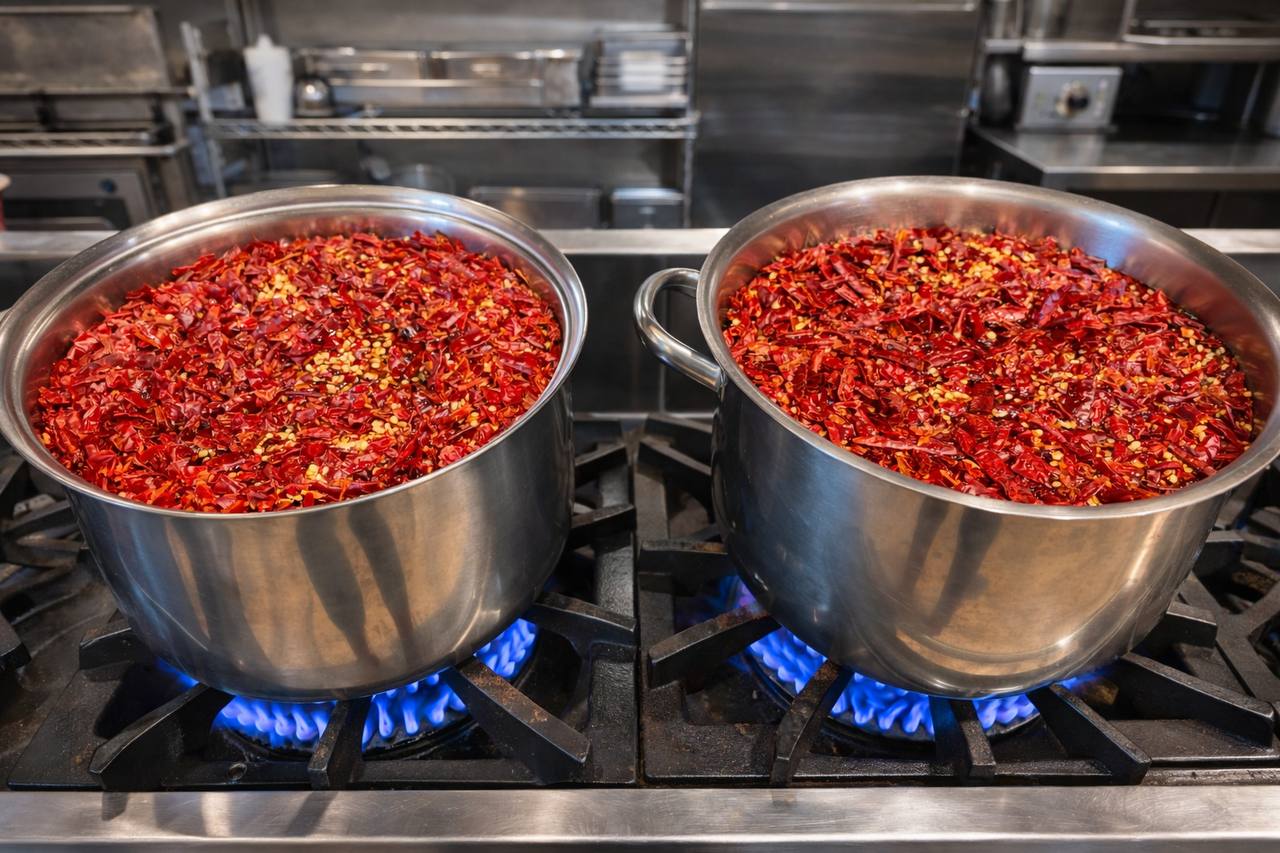
The Ingredient That Changes Everything
Not a generic chili pepper. Not an extract. The real thing — long, thin, burgundy red, with a clean building heat that doesn't assault you. This pepper is the reason CR Hot Honey tastes the way it does.
Why This Pepper
Conor tested a lot of peppers before landing here. The chile de árbol has something most don't — a clean, nutty heat that builds slowly rather than hitting immediately and fading. It doesn't overpower the honey. It works with it.
The dried pepper has a deep burgundy color and a faint smokiness that you taste before you feel the heat. That complexity is what makes CR Hot Honey drizzle-worthy on a cheese board and still hold up on a hot pizza.
It's also a real culinary pepper — used in fine dining, in moles, in salsa de árbol. Not the generic "chili flakes" you find in mass-market hot honey. This is a specific choice, not an afterthought.
The Heat Profile
Chile de árbol sits at 15,000–30,000 Scoville — hotter than jalapeño (2,500–8,000), cooler than cayenne (30,000–50,000). Right in the sweet spot for a honey product.
You get warmth that builds over 10–15 seconds after eating. It peaks at a satisfying level, then softens. No sharp chemical burn. No lingering unpleasantness. Just heat that belongs in food.
How We Use It
We use whole dried chile de árbol peppers, not powder, not extract. They're slow-infused into the honey over time, which pulls the flavor compounds along with the heat — not just the capsaicin.
That's the difference you taste. Pepper extract gives you heat with no flavor. Whole pepper infusion gives you a honey that actually tastes like something.
It's slower. It requires more attention. That's exactly why we do it.
How It's Made
Our Promise
The cooking stays small-batch. The quality stays the same.
CR Hot Honey will continue to be cooked in small batches using the same recipe, ingredients, and standards that built the brand.
As we grow, we may use better equipment to handle the repetitive parts of production — filling bottles, capping, labeling, and packaging.
That doesn’t change what’s in the bottle.
The cooking stays small-batch. The recipe stays ours. The quality stays the same.
We’re willing to make bottling more efficient. We’re not willing to industrialize the food itself.